
Professor Jack Copeland
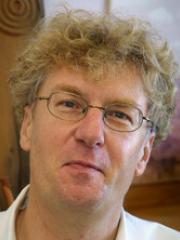
Researcher biography
Jack Copeland FRS NZ is Distinguished Professor of Philosophy at the University of Canterbury, New Zealand, where he is Director of the Turing Archive for the History of Computing, and also Honorary Professor at the University of Queensland.
Jack began life as a physicist and his philosophical research is mostly science-facing, including research in mathematical logic and the philosophy of mathematics; Artificial Intelligence; cognitive science; philosophy of mind and consciousness; thephilosophy and foundations of computing; and the history of science, engineering and digital technology. Much of his work is collaborative and transdisciplinary.
Jack has received various prizes and honours for his research work, including the American Philosophical Association’s Jon Barwise Prize (2017), the citation for which describes him as “the world-wide expert on Alan Turing and a leading philosopher of AI, computing and information”, and the Royal Society of New Zealand’s Aronui Medal (2020) “for research into the foundations, philosophy and history of computing”. In 2017 he was placed on the US IT History Society Roll of Honor, described by the Society as “a listing of a select few that have made an out-of-the-ordinary contribution to the information industry”. The citation for his IACAP Covey Award (2016) recognizes his “substantial record of innovative research in the field of computing and philosophy”. In 2011 he was elected a Fellow of the Royal Society of New Zealand, on the basis of his research and scholarship. Jack received the University of Canterbury Research Medal in 2009. The citation said "Professor Copeland's work is considered remarkable not only for its success but also its breadth. His research ... has brought enormous prestige to the University of Canterbury."
Jack has also won a number of teaching awards at the University of Canterbury, including the Student Choice Great Character Award (2023), UCSA Lecturer of the Year Award (2010), Top Lecturer in the College of Arts (2010), and Best Lecturer in the Faculty of Science (2002).
Jack has been script advisor, co-writer, and scientific consultant for a number of scientific documentaries. One of these, the BBC’s Code-Breakers, directed by Julian Carey, won two UK BAFTA awards and was listed as one of the year’s three best historical documentaries at the Media Impact Awards in New York City (2013). The Man Who Cracked the Nazi Codes, based on Jack’s Oxford University Press biography Turing, and directed by Denis van Waerebeke, won the Best Documentary prize at the FIGRA European film festival (2015) and has been shown widely on TV networks around the world, including ARTE (who commissioned it) and the History Channel. Jack’s large permanent exhibitions at Bletchley Park, Alan Turing’s Papers (opened 2012) and Hitler’s “Unbreakable” Cipher Machine (opened 2013), both co-curated with Gillian Mason, have been viewed by millions of visitors.
Jack's international visiting professorships include the Royden B. Davis Visiting Chair of Interdisciplinary Studies in the Department of Psychology at Georgetown University, Washington D.C., USA, the John Findlay Visiting Professorship of Philosophy at Boston University, Boston, USA, Visiting Professor of Information Science at Det Informations-videnskabelige Akademi, University of Copenhagen, Copenhagen, Denmark, Visiting Professor of Philosophy at the University of Aalborg (Copenhagen campus), Denmark, Visiting Professor of Philosophy at Renmin University of China, Beijing, China, Visiting Professor of Philosophy at Beijing Normal University, Beijing, China, Visiting Professor of Philosophy at Akita University, Akita, Japan, and most recently Visiting Distinguished Professor of Humanities at Plaksha University, Mohali, India. He has been a regular Gastprofessor at the Swiss Federal Institute of Technology (ETH) in Zurich, Switzerland, since 2013 (where he co-founded the Turing Centre and co-directed it until 2020).
Research Fellowships include Senior Fellow in the History of Science and Technology in the Dibner Institute for the History of Science and Technology at Massachusetts Institute of Technology, Cambridge Mass., USA; Visiting Fellow at King’s College, Cambridge, England; Visiting Fellow at Käte Hamburger Kolleg, RWTH, Aachen, Germany; and most recently Visiting Fellow at the Centre Leo Apostel for transdisciplinary research, Vrije University, Brussels, Belgium.
Jack is a member of the Institute of Electrical and Electronics Engineers (IEEE), a member of the American Philosophical Association (APA), a member of the New Zealand AI Researchers Association, and a founding member of the American Association for Philosophy and Computing.